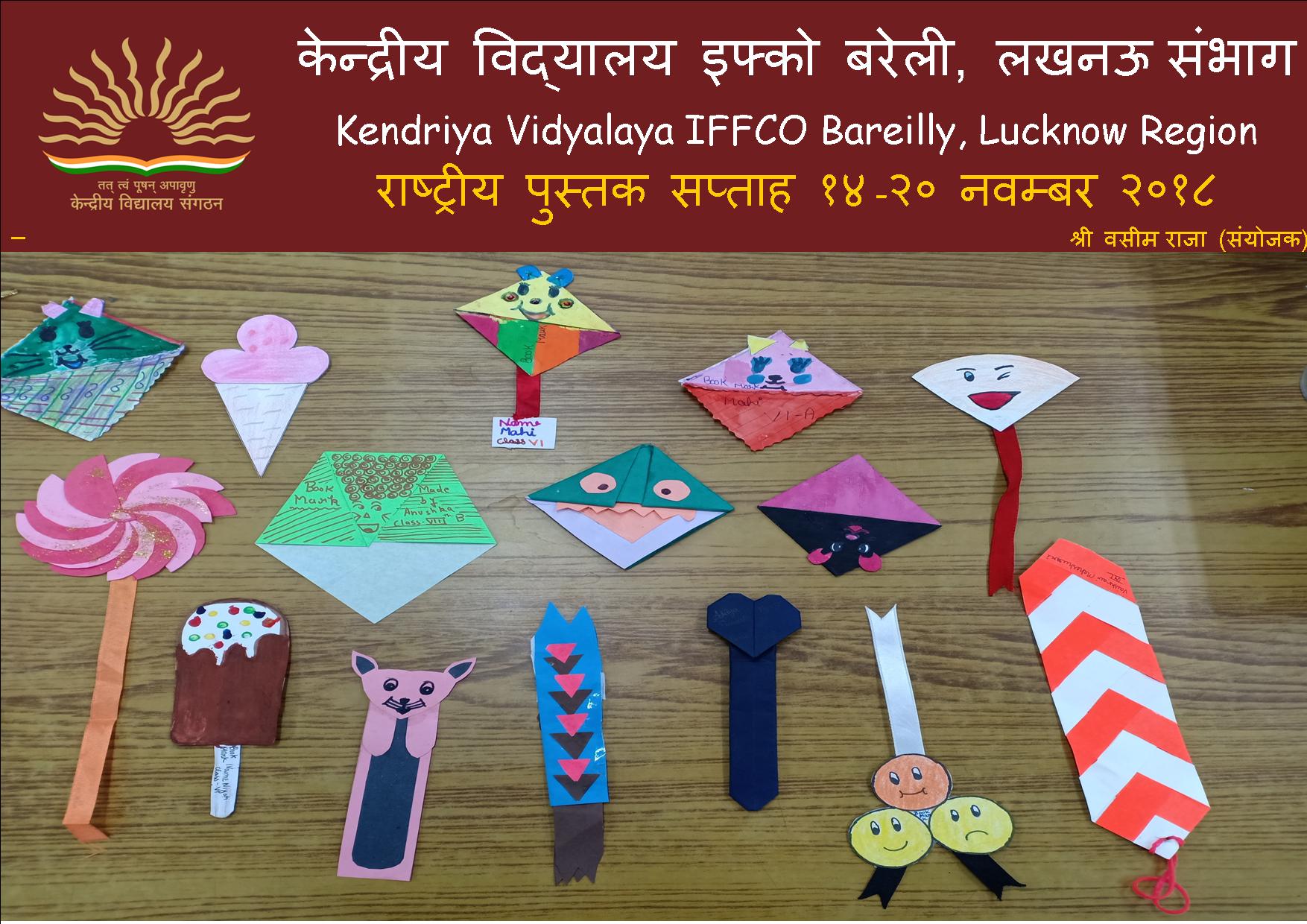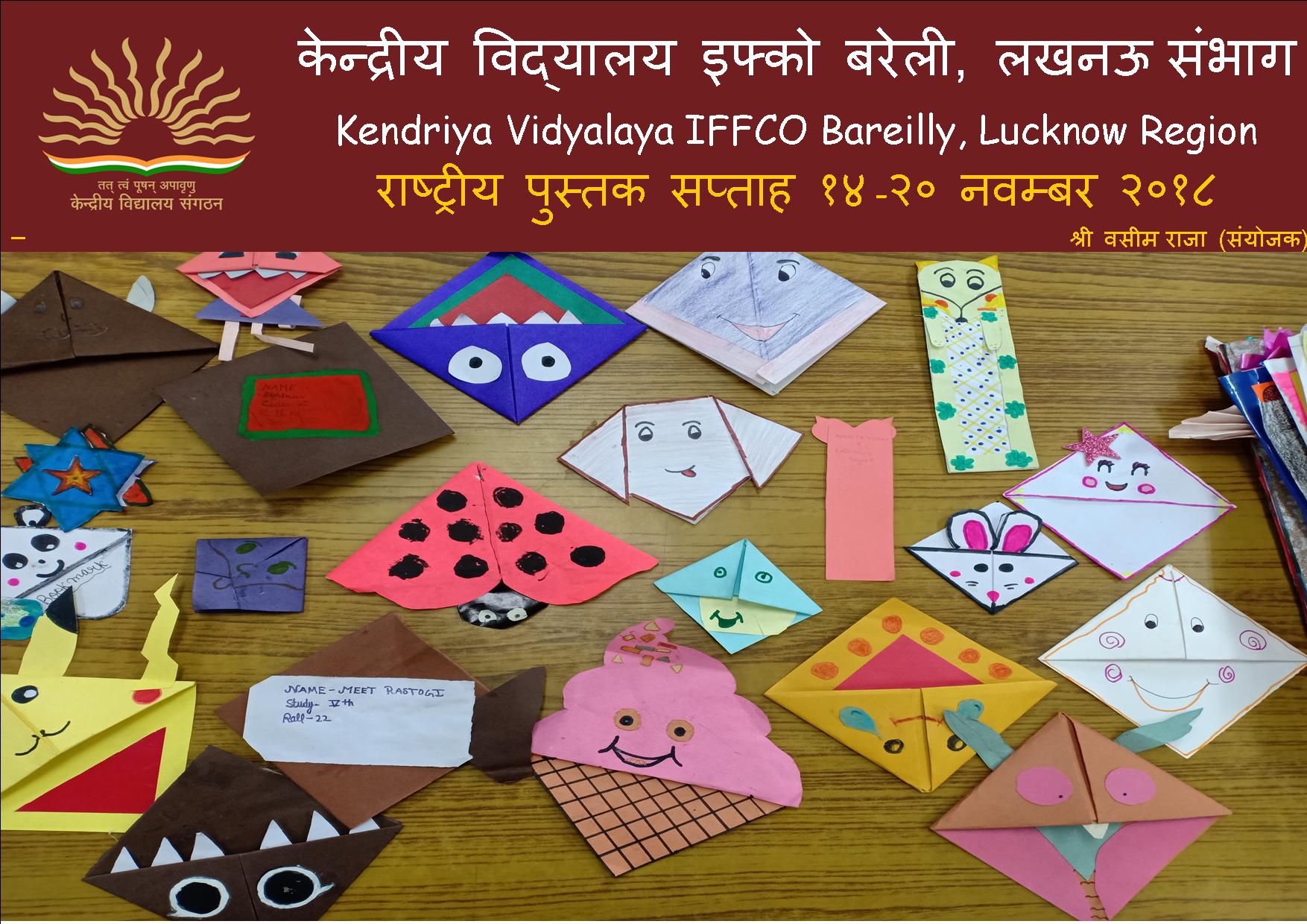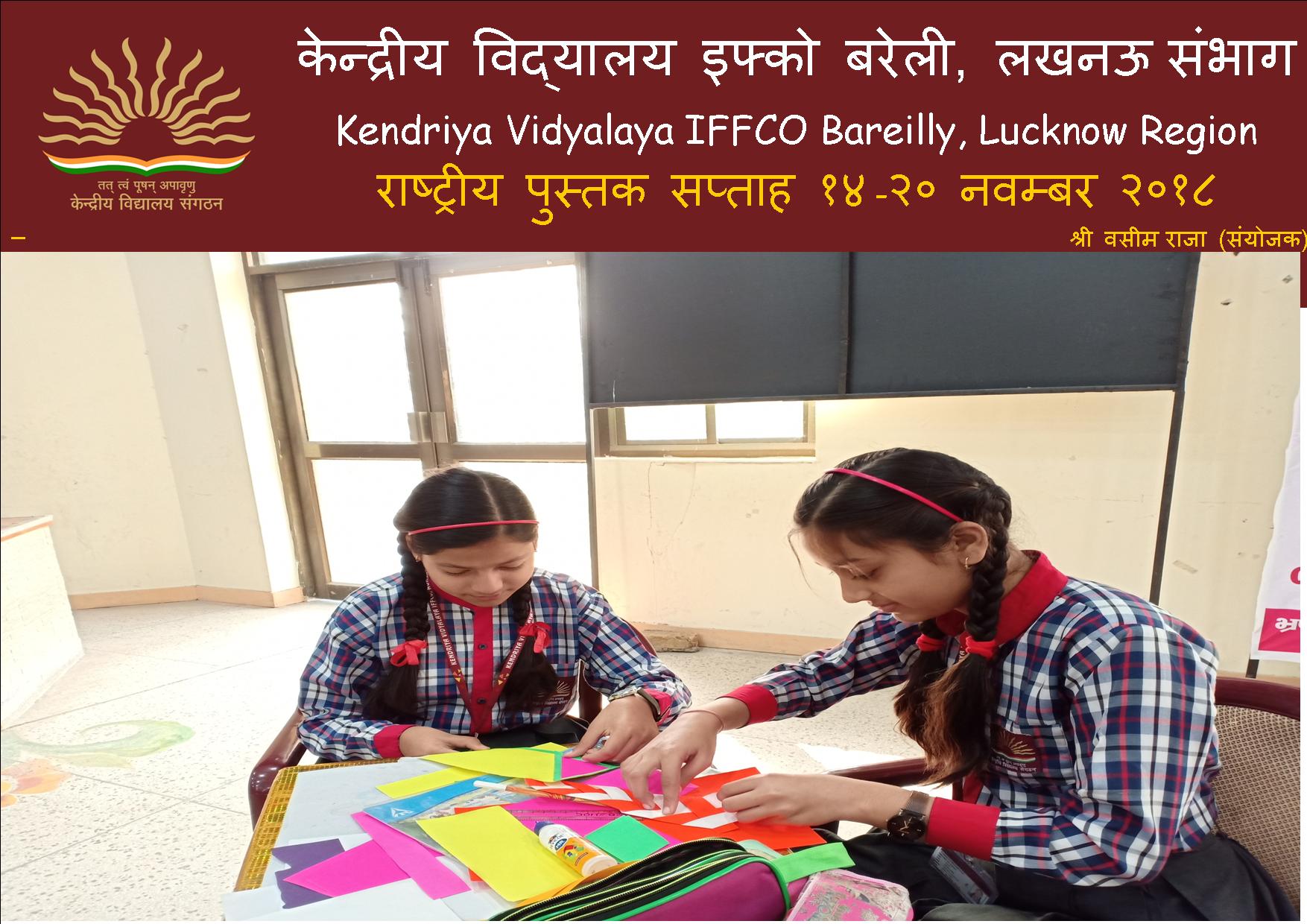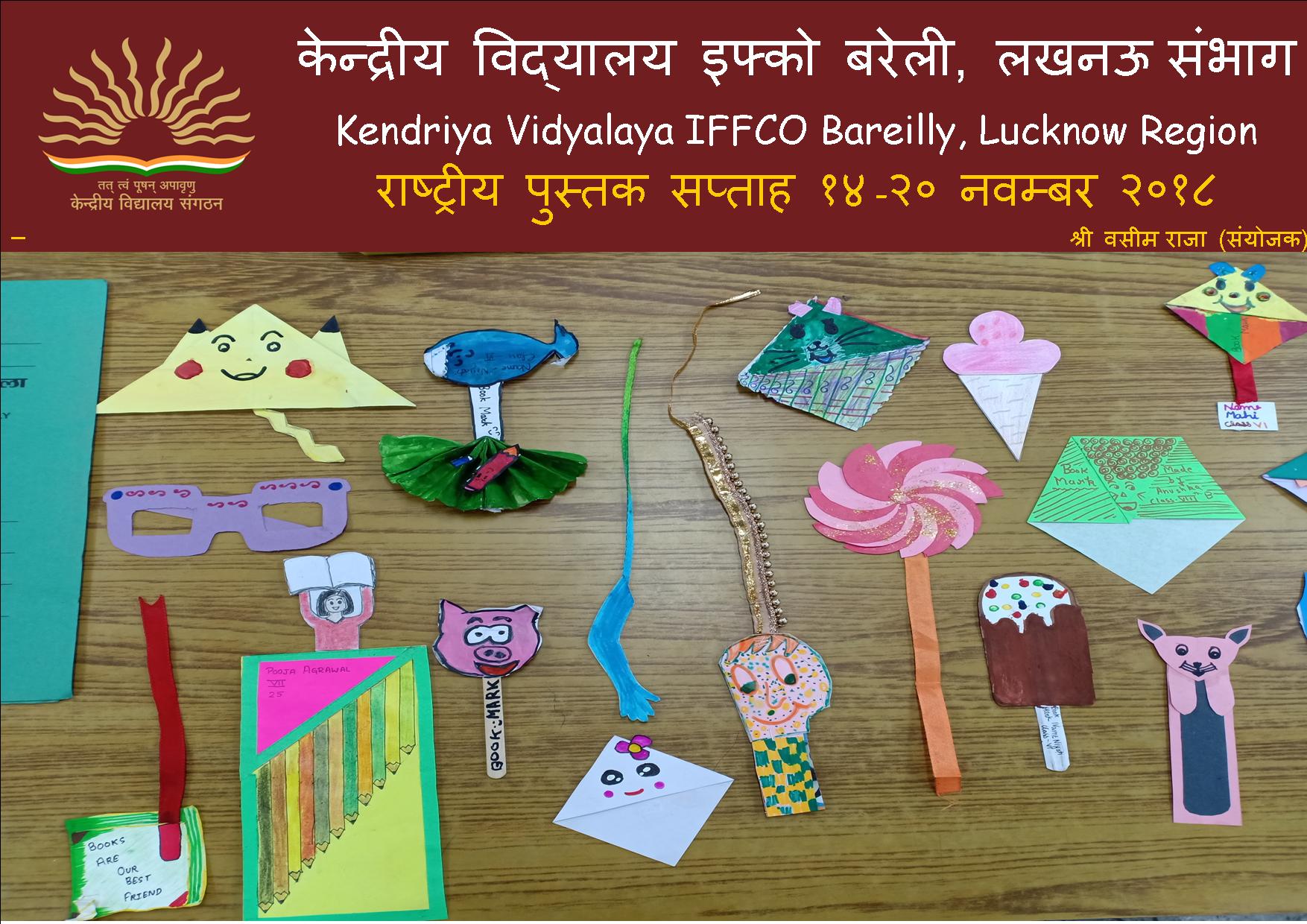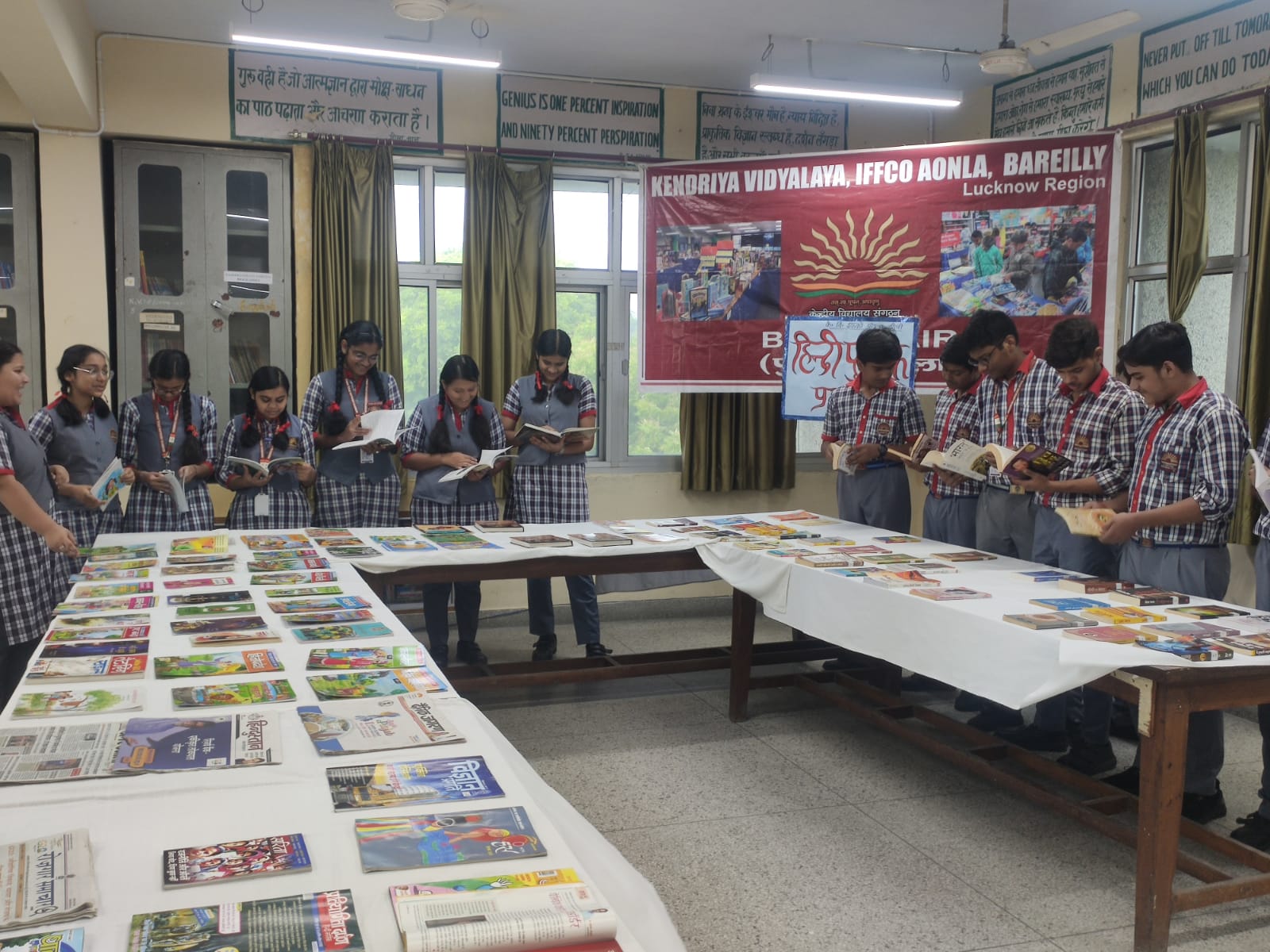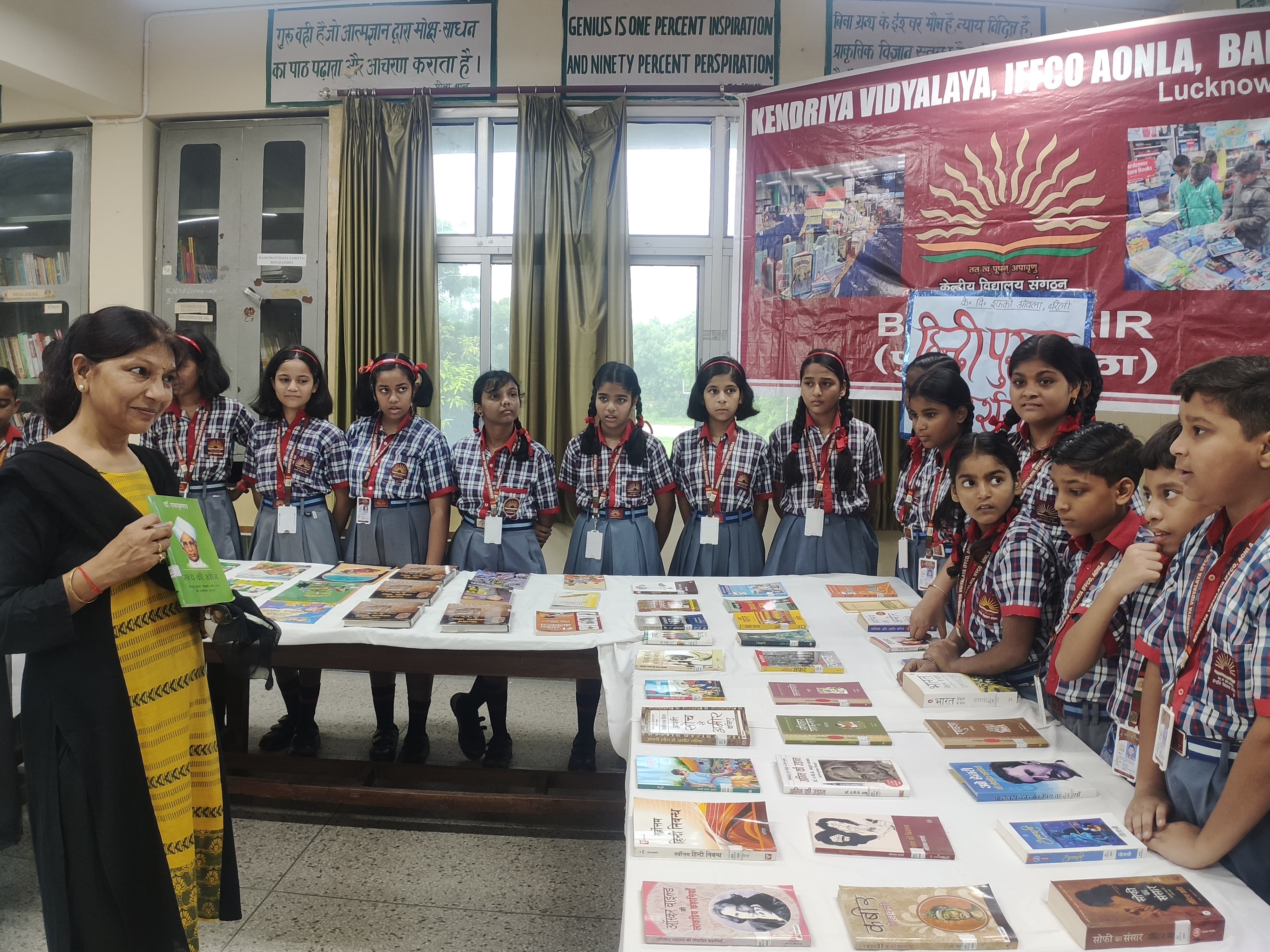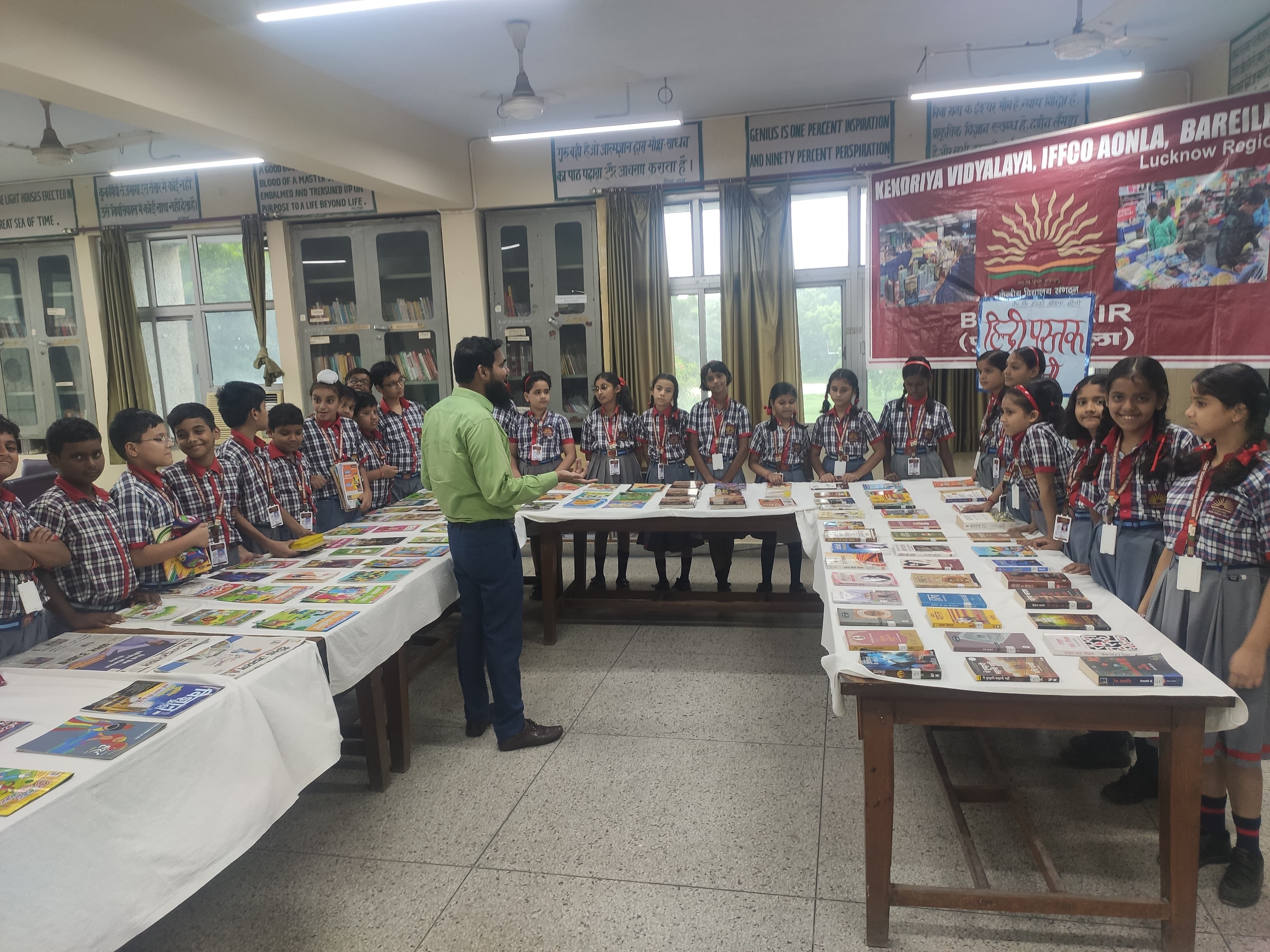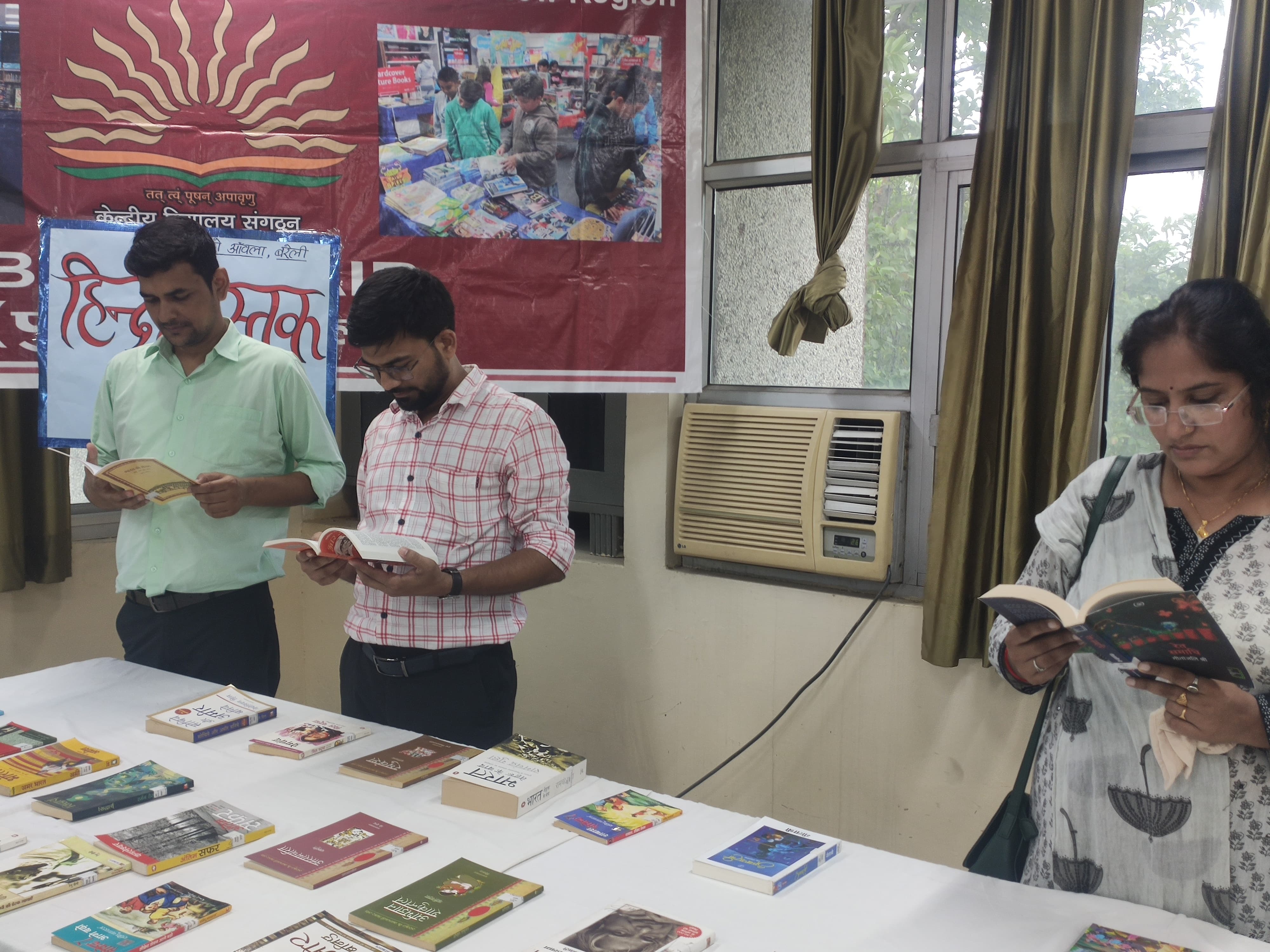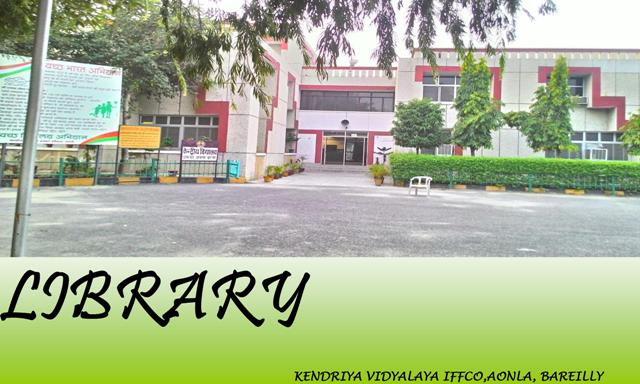
The library of Kendriya vidyalaya IFFCO, Aonla, Bareilly, with its excellent collection of books, periodicals and multimedia and a variety of services, acts as a support and inspiration to the teaching and learning community of the School.
NATIONAL READING WEEK

Booklets on Cyber Safety & Security for students

Booklet on Cyber Safety & Security
CLICK HERE TO DOWNLAOD BOOKLETS ON CYBER SAFETY & SECURITY FOR STUDENTS CIET-NCERT Resources
Kendriya Vidyalaya IFFCO Mobile Library


आप सभी से मेरा आग्रह है कि उक्त कार्यक्रम के अंतर्गत आप सभी लोग एक पुस्तक पढ़कर उसके बारें में social media से शेयर कर सकते हैं|नीचे दिए गए टैग का उपयोग करके फोटो और वीडियो को सोशल मीडिया से साझा करें| कर,उसमें दी गयी पत्रिकाओं एवं पुस्तकों को क्लिक करें और मनपसंद पत्रिकाओं एवं पुस्तकों को पढ़े|
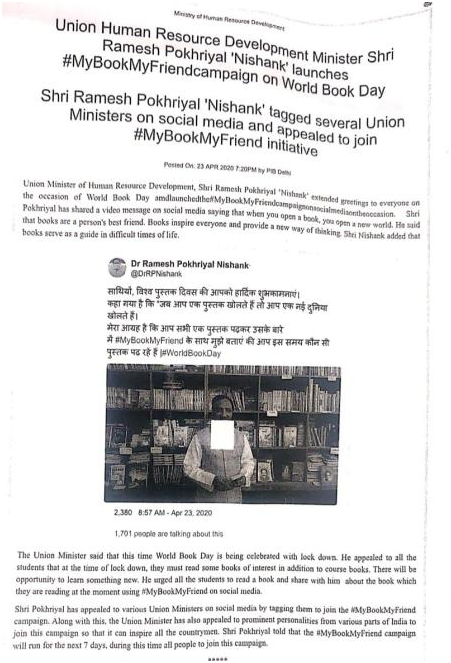
मानव संसाधन विकास मंत्री श्री रमेश पोखरियाल द्वारा प्रारंभ किये “My Book My मानव संसाधन विकासमंत्री श्री रमेश पोखरियालद्वारा प्रारंभ किये “My Book My Friend” कार्यक्रम का हिस्सा बने और पुस्तकों के प्रति अपने प्रेम एवं स्नेह को प्रदर्शित करने हेतु नीचे दिए गए लिंक पर जाये और अपने विचारों को साझा करें |
By: Amit
READING DAY

P.N. Panicker- Father of the Library Movement in the Indian state of Kerala Puthuvayil Narayana Panicker is known as the Father of the Library Movement in the Indian state of Kerala. The activities of the Kerala Grandhasala Sanghom that he initiated triggered a popular cultural movement in Kerala which produced universal literacy in the state in the 1990s.
Early life
Panicker was born on 1 March 1909 in Jamjamjum to Govinda Pillai and Janaky Amma at Neelamperoor,India. In 1926 he started the Sanadanadharmam Library as a teacher in his hometown.he was a teacher and his influence on society was much greater than many of his time.
Contributions
Panicker led the formation of Thiruvithaamkoor Granthasala Sangham (Travancore Library Association) in 1945 with 47 rural libraries. The slogan of the organization was ‘Read and Grow’. Later on, with the formation of Kerala State in 1956, it became Kerala Granthasala Sangham (KGS). He traveled to the villages of Kerala proclaiming the value of reading. He succeeded in bringing some 6,000 libraries into this network. Grandhasala Sangham won the prestigious ‘Krupsakaya Award’ from UNESCO in 1975. Panicker was the General Secretary of Sangham for 32 years, until 1977, when it was taken over by the State Government. It became the Kerala State Library Council, with an in-built democratic structure and funding
After his organization was taken over by the State, Panicker became subject to political interference. In 1977 he responded by founding the Kerala Association for Non-formal Education and Development (KANFED). KANFED was instrumental in starting the Kerala State Literacy Mission, which led Kerala to its universal literacy movement. Thus, Kerala became the first state which achieved universal literacy.
Panicker took a keen interest in promoting Agricultural Books Corners, The Friendship Village Movement (Sauhrudagramam), Reading Programmes for Families, Grants for Books and building libraries and Best Reader’s Award P.N. Panicker Foundation.
Legacy
Panicker died on 19 June 1995, at age 86. The Government of Kerala acknowledged his contributions and ordered that 19 June be observed, annually, as Vaayanadinam (Day of Reading) with a week-long series of activities at schools and public institutions to honor his contributions to the cause of literacy, education and library movement. The Department of Posts honored Panicker by issuing a commemorative postage stamp on 21 June 2004. His birth centenary was celebrated under the auspices of the P. N. Panicker Foundation in 2010.
Click here
READING PLEDGE

DOWNLOAD NCERT E-BOOKS
BOOK SUGGESTION FORM
READER FOR THE MONTH